



How consultants use Fulcrum to prove environmental impact

Clients and regulators judge an environmental consultant’s findings by the field record behind them, sometimes years after the baseline survey. Findings break when methods drift between visits or evidence scatters across files, and the right environmental reporting software closes both gaps at collection. See how Fulcrum helps consulting firms build impact records that can head off added studies and permitting delays.
Key insights
An environmental consultant’s deliverable comes down to a few conclusions: the site is clear, the impact stayed within limits, the mitigation worked. A client or regulator tests those conclusions against the field record behind them. Impact gets proven in that record, and the report narrative summarizes what the observations already show.
For a consulting firm, the field record is the product, and environmental consulting software is where it gets built. A strong record answers the client’s questions, supports regulatory reporting, and gives regulators enough to accept a finding without ordering more studies.
Building that record well starts with knowing what an impact claim has to show and where it tends to break. From there, the question becomes what the software has to capture and what a firm gains when it does.
An impact claim compares what a site looked like before a project with what it looks like after. The environmental impact assessment predicts that change, and monitoring during and after construction shows whether the prediction held. Federal permit decisions also trigger review under the National Environmental Policy Act (NEPA). Since 2023, NEPA compliance has required reliable data and resources, and a consultant’s field record can definitely fit the bill.
Showing the work carries much of an impact claim, from the methodology to each observation’s photos, timestamps, and locations. The baseline has to show the site’s condition before work started, with locations and dates a reviewer can check against regulatory requirements. Follow-up surveys have to repeat the same methods at the same spots, so the comparison holds up under review.
The audiences testing those claims each push from a different direction. Client organizations want proof for their own ESG and compliance reporting, and regulators want enough evidence to approve mitigation without another study. Opposing stakeholders, meanwhile, look for any gap in the baseline that could pin pre-existing conditions on the project.
Impact claims can break at two points: when the field data gets collected, and when someone asks to see it later. A blank Word or Excel template leaves each field tech to decide what to record and how. The answers can change between visits, so a follow-up survey may not measure what the baseline measured. Once the methods drift, the before-and-after comparison loses its accuracy, long before anyone questions the finding.
A regulator reviewing monitoring results can question that finding years after the baseline survey. If the evidence sits in separate files, tracking spreadsheets, photo folders, and emailed drafts, a firm rebuilds the record by hand. By then, memories of the site may have faded, and one mismatched photo can undercut the finding.
Both breaks start at collection, where blank templates let methods vary and evidence ends up in pieces. Patching either one after a regulator asks takes far more work than getting the record right in the field.
Required fields and choice lists build the firm’s methodology and quality standards into environmental data collection and management, so every visit records the same things. Each observation carries its location, time, photos, and video from the moment it’s captured. A reviewer can open any record and see who collected it, where, and when.
The report comes straight from those records, and so does the data the client needs for its own environmental performance reporting. The firm skips the manual rebuild, and drafts no longer move between reviewers as email attachments, since every reviewer has access to the same records.
A strong field record pays off in study fees, project schedules, and repeat business. DIEHLUX, an ecological and natural resource consulting firm, has seen all three since moving its fieldwork to Fulcrum in 2019. The clearest example came on two cell tower projects with strict build-out schedules.
DIEHLUX gave regulatory agencies a geospatially referenced Fulcrum video of the terrain on each site. Each project avoided about $10,000 in additional studies and consultation fees as a result. CEO and co-founder Colin Diehl notes that the avoided permitting delays were worth far more than the fees. He also credits the firm’s field data with keeping clients coming back.
The savings, the protected schedules, and the repeat business trace back to a record clients and regulators could check themselves. DIEHLUX built that record during the work, so the proof was ready when the agencies needed it.
Fulcrum is the Field Operations Management platform environmental consultants use to build impact records regulators can verify. Each firm builds the workflows behind those records around its own methods and permits. When a new permit or client requirement comes in, the firm extends a workflow to fit it, keeping compliance processes current.
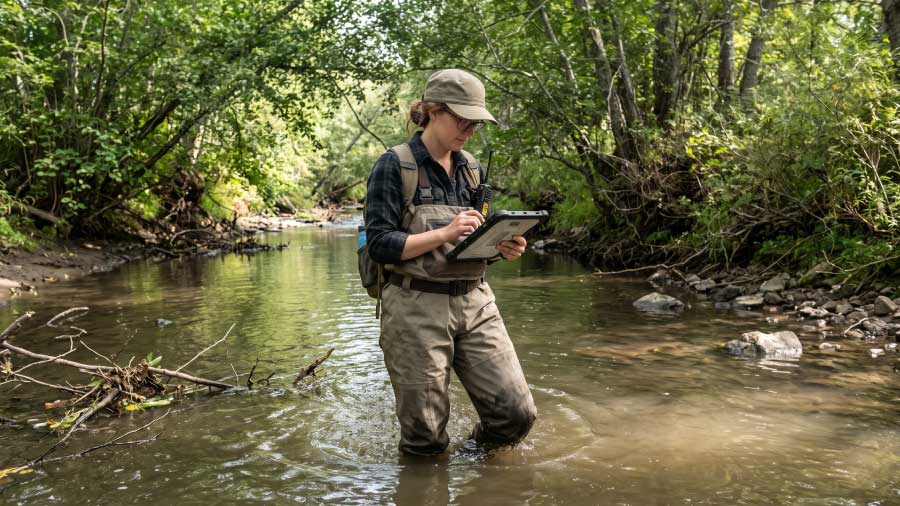
On site, teams work through those workflows in Fulcrum’s field data collection apps on a phone or tablet. With Audio FastFill, a single spoken description can fill several structured fields, leaving hands free for the work. Even at sites with no signal, the apps keep working from downloaded maps and sync each record once a connection returns.
Once records sync, Fulcrum’s geospatial capabilities keep each observation tied to its location in the client’s GIS. From there, the baseline, every follow-up, and the final report all draw on that one record, giving project teams full visibility.
Further reading: Wildnote joins Fulcrum. The team behind Wildnote, field software made for environmental professionals, now works within Fulcrum. Their years of environmental field experience now go into the platform consultants use to build impact records.
An impact report’s conclusions get decided in the field, one observation at a time, long before anyone writes them up. Firms that capture each observation the same way, with its evidence attached, can answer a challenge from the record itself. Treating that record as the product turns a firm’s fieldwork into a reason clients hire it again.
For anyone comparing environmental impact assessment software or environmental compliance software, the test is whether a product builds the record on site. A platform that passes turns every site visit into evidence the firm can stand behind.
Environmental impact conclusions are won or lost in the field. Fulcrum gives your teams a single, offline-capable platform to capture defensible baseline, monitoring, and follow-up data with location, photos, and timestamps locked to every observation. Request a free custom demo and see Fulcrum running your environmental workflows.
Why do baseline surveys carry so much weight in an environmental impact claim?
The baseline survey records a site’s condition before work starts, and every later finding gets measured against it. If the baseline lacks clear locations, dates, or photos, follow-up surveys have nothing reliable to compare against. Gaps in the baseline also give opposing stakeholders a way to pin pre-existing conditions on the project.
How does an environmental impact assessment connect to field data?
An environmental impact assessment predicts how a project will change a site, from water quality and waste to air emissions, before work begins. Monitoring during and after construction then shows whether that prediction held, using the same field methods as the baseline survey.
Why should field photos be annotated when they’re taken?
Field photos annotated on site stay tied to the right observation, location, and time. Labeling them later relies on memory, and a photo can end up matched to the wrong observation. A single mismatched photo can undercut the finding it was meant to support.
What does NEPA compliance require of field data?
The National Environmental Policy Act (NEPA) requires federal agencies to assess the environmental effects of their proposed actions, including permit decisions, before deciding. Since the 2023 amendments, agencies must also use reliable data and resources in that review. Consultant field records are one source of that data when each observation traces back to the site.
What can make an environmental impact claim hard to defend?
An environmental impact claim gets hard to defend when survey methods change from one visit to the next. Blank Word or Excel templates often cause the drift, since each field tech decides what to record. Evidence spread across separate files and photo folders then has to be rebuilt by hand when questions come.
What should environmental reporting software capture?
Environmental reporting software should capture each observation with its location, time, photos, and video at the moment of collection. Required fields and choice lists keep every site visit consistent with the firm’s methodology and applicable environmental regulations. Reports should then generate from the same records the field team collected.
How can an environmental consulting firm keep survey methods consistent across field staff?
An environmental consulting firm keeps survey methods consistent by building its methodology into digital forms with required fields and choice lists. Every field tech, from seasonal staff to senior biologists, then records the same things the same way on every visit. The baseline and each follow-up stay comparable no matter who collected them.
How do environmental consultants use Fulcrum?
Environmental consultants use Fulcrum, the Field Operations Management platform, to build impact records from baseline survey to final report. Each firm designs its workflows around its own methods and permits, so the record matches how it already works. Client organizations and regulators can then check any finding against the observations behind it.