Ascent is one of North America’s leading providers of mission-critical and data center engineering, construction, and operational services. Some of its clients include companies in the FinTech, hyperscale, real estate development, healthcare, and internet service provider space.

Data center design and build through operations and maintenance support
St. Louis, Missouriascentcorp.comWith Fulcrum, we get about 1½ times as much information and turn it around in about 20% of the time. It has made a tremendous difference in our efficiency.
Kyle Dearing
Data Quality Manager, Ascent
As soon as I got my hands on Fulcrum, I knew we could use it for everything. It would considerably speed up our process and make us more efficient, so I started pushing for it across the company.
Kyle Dearing
Data Quality Manager, Ascent
Ascent is one of North America’s leading providers of mission-critical and data center engineering, construction, and operational services. Some of its clients include companies in the FinTech, hyperscale, real estate development, healthcare, and internet service provider space.
Ascent routinely conducts audits through two business models. On the turnkey side, the company coordinates the vendors who maintain many smaller footprint critical facilities with gray and white space infrastructure. On the site operations side, critical facility managers, assistant critical facility managers, and technicians work inside each facility and maintain its equipment.
Kyle Dearing, Data Quality Manager at Ascent, leads the team responsible for accurate asset records across that portfolio. His team reviews every asset change, from planned replacements and new installs to emergency replacements, and verifies model numbers, serial numbers, specifications, and classification. The team also checks the preventive maintenance reports vendors submit every day against the assets on file at each site.
Dearing’s first experience with Fulcrum came on an ISP data center audit project, and he saw a much wider fit almost immediately.
“As soon as I got my hands on Fulcrum, I knew we could use it for everything,” he said. “It would considerably speed up our process and make us more efficient, so I started pushing for it across the company.”
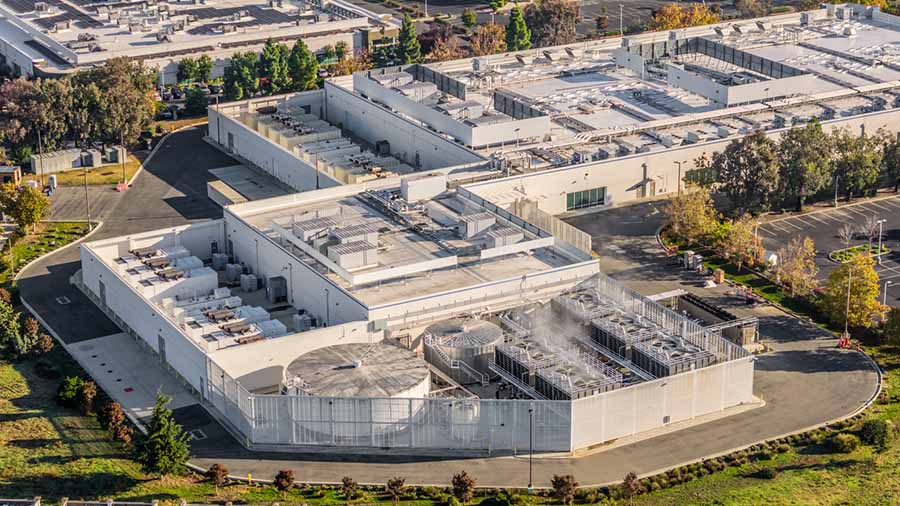
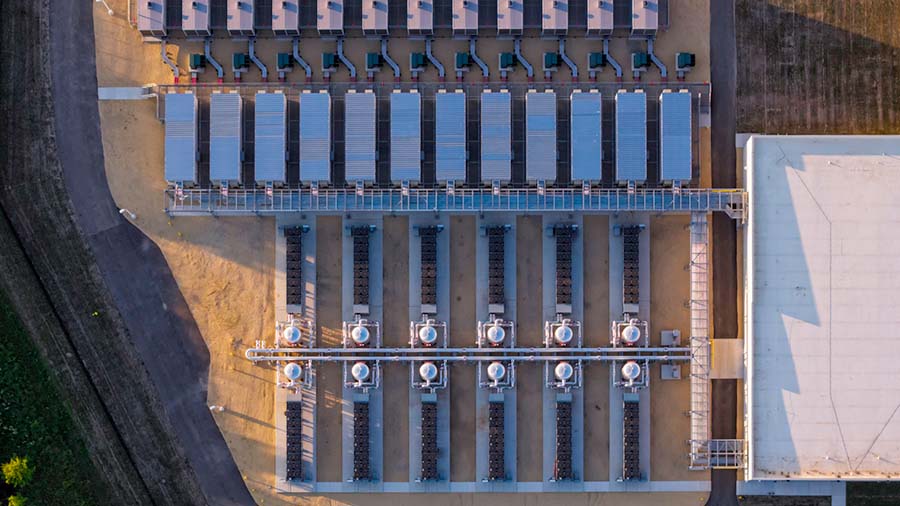
Ascent tracks about 75 asset groups across its facilities, and a single site can hold anywhere from 40 assets to a couple thousand. Electrical gear and cooling systems fill the interiors, and generator systems and rooftop or grade-mounted HVAC units sit outside.
Ascent spent its first year or so with Fulcrum testing whether it could deliver at that scale. Once it did, Dearing earned approval to make Fulcrum part of how Ascent documents all of that equipment.
“I got the blessing to essentially incorporate this into our standards as far as how we capture everything, how we audit all of our information,” Dearing said.
His goal was cleaner processes and better efficiency, part of a wider push at Ascent to put technology to work, including AI tools for day-to-day tasks. The timing also lined up with a period of growth. As Ascent landed larger customers with bigger footprints, it faced more stringent asset data expectations.
“Another reason we wanted to implement Fulcrum was to have something more structured and efficient that would document all of our findings at the onset,” Dearing said.
Dearing built Ascent’s asset capture and condition audit apps himself, with no professional development background. He configured fields for each of Ascent’s roughly 75 asset groups, so every classification asks for exactly the details it requires.
The information we capture is much more robust now, because every standard and specification we need to track is built in.
Kyle Dearing
Data Quality Manager, Ascent
“Fulcrum makes it easy,” he said. “I can drag, drop, and click, and that made a tremendous difference in building apps without writing code.”
Because he builds the apps himself, Dearing doesn’t rely on anyone else to make changes. Over the past year, he refined them with feedback from the field teams who use them and reworked them around those recommendations.
“I changed everything around based on their feedback, and now it’s running smoothly,” Dearing said. “We’re finally at the point where I’m comfortable rolling it out across our sites.”
Under the old process, documenting a site meant walking the facility with a laptop and a camera, then building each record from the photos afterward.
“At a site with a thousand assets, you’d take four or five pictures of each one, then go back, refer to every picture, and document all the information,” Dearing said. “It was a lengthy process. Sometimes it took us over a month to capture everything, and then more admin time to get it all into the system.”

Dearing saw that process firsthand at a data center Ascent operated in Atlanta before the company adopted Fulcrum. He and a colleague spent three to four days photographing the facility and came away with roughly 5,000 photos. Once capture was complete, a special project manager spent weeks turning those photos into documented assets.
Expansion work at one of Ascent’s existing sites in Toronto gave the company a direct comparison. With Fulcrum, one person captured about 1,400 assets in four days, and the whole project was turned around within a week. In contrast, at Atlanta two people had spent three to four days capturing roughly 1,000 assets, followed by six weeks of processing photos.
“One person in Toronto captured more assets on his own than the two of us did in Atlanta,” Dearing said. “He collected all the information we needed, and the whole thing was turned around in a week.”
He added, “With Fulcrum, we get about 1½ times as much information and turn it around in about 20% of the time. It has made a tremendous difference in our efficiency.”
Fulcrum gives us a way to verify the information that we didn’t always have before.
Kyle Dearing
Data Quality Manager, Ascent
Ascent’s equipment varies widely, and so does the information each piece requires.
“We work with about 75 asset groups, and each one has its own specifications,” Dearing said.
Before Fulcrum, site teams captured all of it without the reference material in hand, which left room for gaps. When a tag photo was hard to read or a detail needed a second look, someone had to return to the equipment, adding 10 to 15 minutes to a full maintenance workload.
“Our site teams are responsible for maintaining all this equipment,” Dearing said. “When you ask them for small details that don’t affect what they have going on, they’re going to push back and say they don’t have time.”
With Fulcrum, the full specification list goes wherever technicians go. As someone photographs a piece of equipment, the capture app presents the fields for that asset classification. Details are entered at the equipment with the tag in view, and a record can’t be completed until every required field is filled in. Dearing designed the app to be easy for anyone on a site team, including people who are new to it or less comfortable with technology.
“The information we capture is much more robust now, because every standard and specification we need to track is built in,” Dearing said. “I’d say it’s close to 100% correct, and there’s very little we have to update after capture.”
Every asset change across Ascent’s portfolio runs through Dearing’s data quality team. Under the old process, site teams photographed equipment on site and matched those photos to the right records later at a desk. Reviewers then worked through documents, spreadsheets, and photos to confirm that each set belonged together and to track down anything missing.
“A common mix-up was pictures coming in with typed or written data from a different piece of equipment,” Dearing said. “You’d get crossed wires, where the model number listed really belonged to the unit right next to it.”
With Fulcrum, technicians photograph each asset and enter its details at the equipment in a single step, so photos and data arrive together. Reviewers run the same quality checks as before, now on structured records that line up with the photos taken in the field.
As we go year by year, we document the deterioration of each asset, and that prepares our clients to replace it. It gives them what they need for financial planning when it comes to replacing very expensive equipment.
Kyle Dearing
Data Quality Manager, Ascent
“Fulcrum gives us a way to verify the information that we didn’t always have before,” Dearing said.
Records also sync as the work happens, which shortens the path from the field to Ascent’s system.
“We can have an asset captured and in the system the same day, which used to be unheard of with this many assets,” he said.
Replacing failed equipment quickly depends on having its specifications on file. When a breaker inside a switchgear goes down, for example, Ascent needs its voltage on hand to have a replacement ready.
“We need to have something ready to plug and play so everything stays online, which is the goal in the data center industry,” Dearing said. “We’ve got to stay online 24×7.”
Under the old process, a detail missed during capture could go unnoticed until that moment. Complete records from Fulcrum put the information on file from the start, so Ascent can identify replacement parts and plan the replacement of whole units.

The same records support longer-term planning for clients. Dearing built a second app for yearly audits that scores each asset’s condition, a step inconsistent capture had made harder in the past. Over time, those scores will build a condition history clients can use for end-of-life assessments and capital expenditure budgets.
“As we go year by year, we document the deterioration of each asset, and that prepares our clients to replace it,” Dearing said. “It gives them what they need for financial planning when it comes to replacing very expensive equipment.”
While Ascent rolls out Fulcrum across the site operations side of its business, Dearing is looking ahead at where it could go next.
Dearing already has a next use in mind. Every day, his site teams walk each building to visually check that equipment is running properly. Once asset capture is in place, he’d like to document those rounds in Fulcrum too. Further down the road, he wants to reach the point where site teams use Fulcrum to document their maintenance work as well.
Environmental health and safety is another opportunity. Ascent has deep EHS expertise in-house, and the work ahead is turning that knowledge into an app site teams can use. Fulcrum’s AI app-building tools let a builder describe a process in plain language, including the safety steps it requires, and generate the app from that conversation.
“That would be very useful, especially for the EHS work,” Dearing said. “Our EHS lead knows his stuff, and I think the AI tool would help me turn that expertise into a working app.”
Beyond Ascent’s own sites, Dearing would like to bring the same consistency to the roughly 600 turnkey facilities where Ascent relies on vendors and clients for asset updates. On the systems side, Ascent is building its own CMMS and has already purchased QR tags for its equipment, and it plans to explore connecting the new system with Fulcrum once it launches.
Each of those steps would build on the complete, consistent asset records Ascent’s site teams now capture with Fulcrum.
We can have an asset captured and in the system the same day, which used to be unheard of with this many assets.
Kyle Dearing
Data Quality Manager, Ascent
Six weeks of desk work used to stand between an Ascent site walk and a usable set of asset records. Now one person can document a site in four days and have every record in the system within the week, using apps Dearing built himself without writing a line of code. For a company taking on larger clients with bigger footprints, that speed and accuracy turns asset data into an advantage Ascent can carry into every facility it adds.
“Toronto was a great example of why we need to get everyone using Fulcrum as soon as possible,” Dearing said.
Ascent is a North America-based provider of mission-critical infrastructure solutions supporting data centers and other highly reliable environments. The company delivers a comprehensive portfolio of engineering, construction, facility operations, maintenance, controls and automation, and IT site services designed to improve uptime, operational performance, and infrastructure reliability. Through its 24×7 Operations Center, nationwide service network, and proprietary Navigator platform, Ascent provides clients with real-time operational visibility, maintenance coordination, compliance reporting, and emergency response support. Serving customers across industries including technology, cloud services, healthcare, logistics, and financial services, Ascent combines engineering expertise, operational experience, and technology-driven solutions to help organizations manage and optimize critical facilities throughout their lifecycle.