



What environmental soil boring data needs to survive an audit
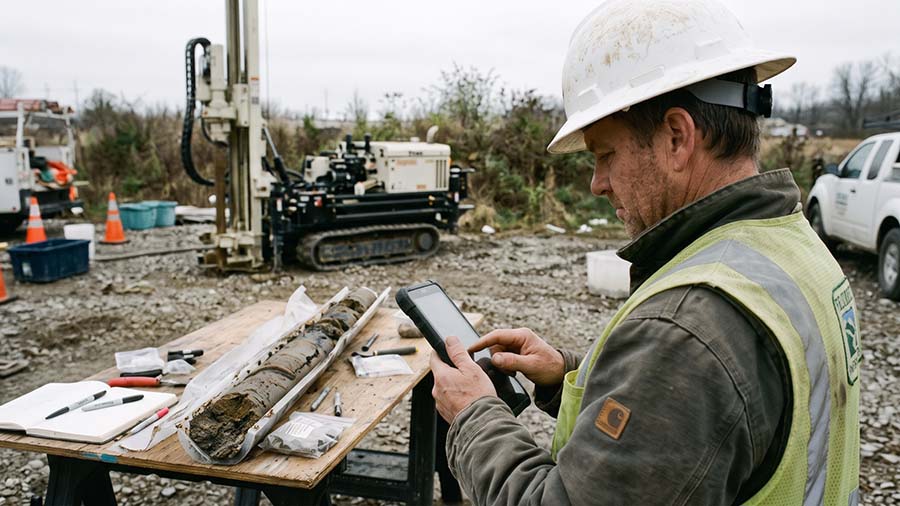

A soil boring log can get the geology right and still fall apart in an environmental audit. If a reviewer can’t tell who recorded a value, when, or with which meter, the log starts to wobble. Many of those answers exist only at the boring and vanish once the rig pulls out. See what a defensible log needs, and how Fulcrum captures every entry at the rig with its trail intact.
Key insights
A soil boring log can describe the geology perfectly and still fall apart in an audit. Trouble can start in the entries around the description: a missing timestamp, an unrecorded meter, a mismatched sample ID. In a Phase II environmental site assessment or other subsurface investigation, each entry needs a person, place, time, and instrument behind it.
Many of those answers exist only at the boring, while the rig is still turning. An environmental audit or agency review can show up months later, long after anyone could go back and check. The logs that hold up carry their provenance from the first push to the last sample.
Provenance slips away one entry at a time, somewhere between the rig and the report. Each slip looks minor on the day and turns into a question once a reviewer starts tracing values. The five below show how quickly a solid log can lose its footing under review.
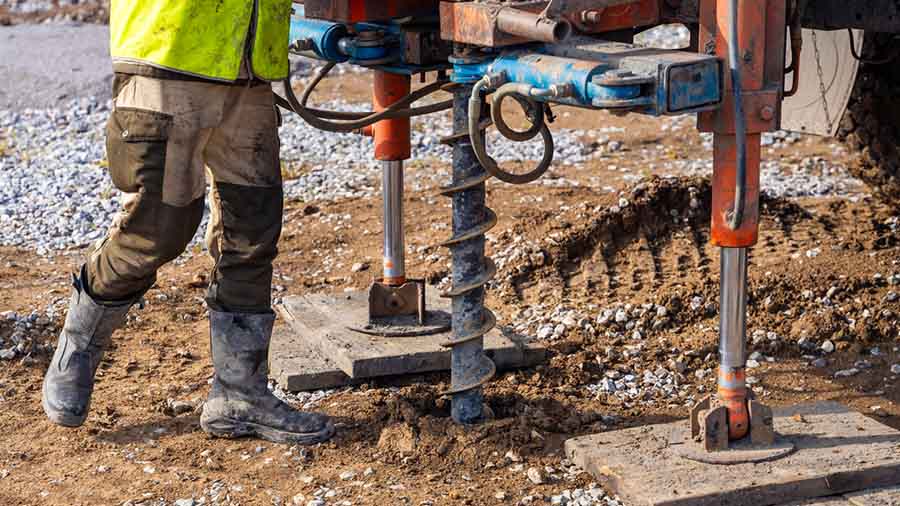
All five failures thrive in a process built on paper sheets and retyping. When a geologist completes a paper sheet from notes that evening, the timing of every entry disappears. Retyping that sheet into boring log software then adds a second author to every line. The finished file looks clean, but it keeps no record of the handoff that produced it.
Requirements for boring logs vary by agency, state, and project, so no one list covers them all. The U.S. Army Corps of Engineers offers a solid example in its manual for boring and monitoring wells at hazardous waste sites. The manual applies to Corps teams and their contractors, including those on Corps-managed Superfund cleanups. Most of the entries below follow its lead, and each one answers a question a reviewer is likely to ask.
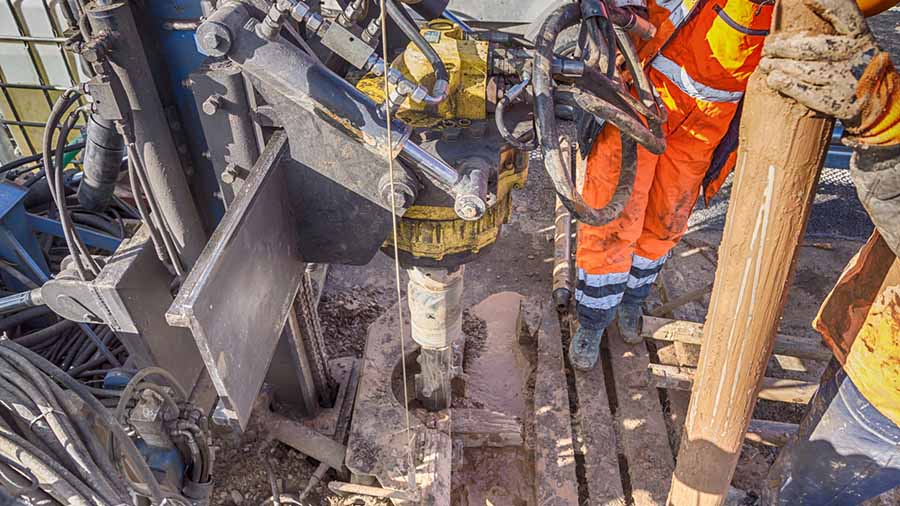
A project’s quality assurance project plan (QAPP) or state program may add more entries to that list. Whatever the rulebook, each entry does one job: tracing a value back to the moment someone recorded it. A log that does that line by line can stand up to whichever reviewer comes next.
Project teams can rebuild some entries on soil boring logs later from invoices, survey files, or lab reports. But others exist only at the boring, in the minutes between one core coming out and the next push. Once the rig pulls out, those entries turn into whatever somebody remembers about the day.
EPA Region 4’s Laboratory Services and Applied Science Division tackles that problem head-on in a logbooks procedure for its own staff. Its rules call for recording observations as they happen, with every entry dated and signed or initialed. By that standard, a value written up over dinner is a reconstruction, however careful the person writing it. Field staff also note any QAPP deviation in the logbook while still in the field, before anyone writes the report. The procedure even accepts electronic records as originals, provided nobody jotted them on paper first.
Even a reading logged the moment it happens can be wrong if the meter behind it is off. Meters lose accuracy gradually, and a bad reading looks just as solid on the log as a good one.
Checking the meter before and after use exposes any slippage, and EPA’s procedure requires both checks and the meter ID. For consultants on state-led projects, the state sets those rules, and some states go further. For example, Florida requires every field reading to sit between a passing check before sampling and a passing check after it. When a vapor meter fails its closing check, every reading since the last passing check gets flagged as qualified data. Florida’s rules then attach a qualifier code to each of those values in the report.
Under EPA procedure, corrections leave a trail too, so a fixed value never erases the original. On paper, a mistake gets one line through it, plus a date and initials, so the original stays readable. In electronic files, each edit needs a note explaining it, with the date and the initials of whoever made it. Anyone reviewing the record can see the old value, the new one, and who made the call.
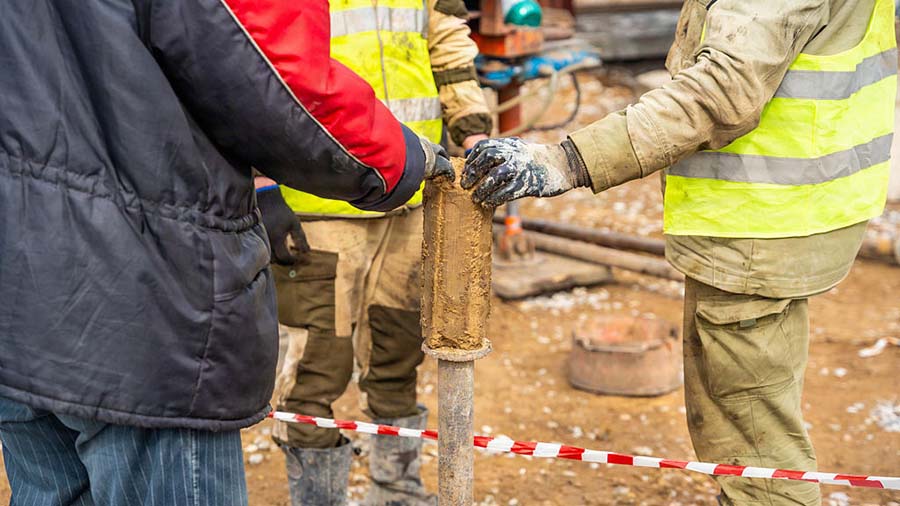
Put together, those rules describe a solid record: written on the spot, by a named person, with changes visible. A depth written down from memory fails that test, even if the number turns out to be right.
A paper or spreadsheet boring log passes through several hands on its way from the rig to the report. Each handoff is a chance to lose a timestamp, garble a sample ID, or overwrite a correction. Fulcrum cuts out those handoffs by capturing each entry at the boring, upstream of logging software and lab systems.
Environmental teams build their own boring logs in Fulcrum, with required fields for soil descriptions and classifications, sampling intervals, blow counts, and borehole records. A missing value shows up at the boring, while the geologist can still fill it in.
At rig setup, the geologist opens a record that captures the boring’s location and a timestamp. From there, Fulcrum’s ArcGIS integration carries that point straight into the project’s GIS layers. Capture works offline on sites with no signal, and the record syncs once the device reconnects.
As drilling proceeds, the geologist logs each interval and soil layer with its soil description and recovery. Each interval also carries a timestamped photo of the core that came out of it. When the driller switches methods at 12 feet, for example, the change goes in as its own entry.
PID readings sit right beside the instrument ID and calibration record for the meter that took them. Sample IDs go in at the interval where each sample came out of the ground, ready to match the laboratory analysis that comes back later. Record-level history shows what changed and who changed it, so corrections someone makes when off site stay visible.
In the office, borehole summaries, site maps, and tables of subsurface conditions come straight from the structured data. Report values link back to the original soil sample, so any number traces to its interval.
Customer spotlight. Before 2019, ecological consulting firm DIEHLUX kept its inspection records in Word and Excel files. “We were running into version control and chain of custody issues, and had to make sure no revisions were made that weren’t approved. There was a lot of room for error, and many layers of redundant communications,” said Colin Diehl, the firm’s CEO and co-founder. Moving those records into Fulcrum changed what stays behind when experienced staff move on. “Even with senior folks retiring, we still have this layer of documentation that remains,” he said. “We can always start where we left off, and know the data is available.”
Across projects, Fulcrum Insights can answer plain-language questions about those records, like which sites logged stained soil. The same structured capture extends to other environmental remediation workflows, from site assessments to groundwater sampling.
By the time a boring entry reaches the report table, every value from it carries its own history. Depth, meter, sample ID, and the person behind each entry all sit in one record. Nobody has to rebuild anything from memory, because the geologist logged every entry on the spot.
An audit goes through a boring log entry by entry, long after the drilling ends. The rules differ from agency to agency, and the standard behind each entry barely changes. It comes down to three things: logged in the moment, by a named person, with every change visible. No amount of argument after the fact will conjure a calibration record nobody wrote down.
Much of that record exists only at the boring, and it disappears once the rig pulls out. Firms that capture those entries in the moment hand reviewers soil boring data that answers its own questions. Environmental data validation gets easier too, because every entry already shows where it came from. The project manager who signs the report can answer a reviewer’s question by pointing to the entry behind it.
Geology will always leave room for interpretation, and a well-kept log keeps everything else out of the argument. When the questions finally come, the answers are already sitting in the log, right where the geologist left them.
Your team already knows which entries a reviewer will ask about, and which ones are hardest to rebuild later. Fulcrum puts those entries on a structured form at the boring, with the trail behind each one built in. Request a free custom demo, and we’ll show you how your team’s boring log would run from rig to report.
Why do environmental soil boring logs commonly fail regulatory audits despite accurate geologic descriptions?
Audits of assessments and other environmental due diligence often fail because of missing data provenance rather than flawed geologic interpretations. Reviewers reject logs when they discover omitted timestamps, unrecorded drilling method switches, missing instrument calibration logs, or sample IDs that do not match chain-of-custody forms.
Why must a specific coordinate reference datum be listed alongside borehole locations?
GPS coordinates are ambiguous without explicitly identifying the underlying map datum and coordinate system. Confusing an outdated datum with a current one can shift a borehole’s mapped location by 10 to 100 meters, which can mistakenly place the boring across a property boundary.
Why must drilling method changes be documented directly on the boring log?
Switching tools partway down a borehole, such as transitioning from direct push drilling to hollow stem auger, fundamentally changes how subsequent soil samples are retrieved. Omitting the depth of that transition misrepresents the physical sampling conditions for every deeper core.
Why is recording borehole depths from memory after leaving the drill site a regulatory risk?
Entering depths after the drill rig has departed strips the record of its real-time timestamp. Regulators and auditors treat entries made away from the borehole as unverifiable reconstructions rather than contemporaneous field observations, undermining data defensibility.
What instrument documentation must accompany field screening readings like PID measurements?
Field screening entries must include the photoionization detector’s make, model, and serial number alongside the recorded measurement. The log must also trace back to pre-use and post-use calibration checks to confirm that the meter read accurately while samples were being screened.
What are the regulatory consequences if a field vapor meter fails its post-use calibration check?
A failed calibration check after sampling may invalidate the certainty of earlier field readings.
What happens during an audit if a boring log sample ID does not match the chain-of-custody form?
A single transposed number or mismatched ID orphans the analytical laboratory result. Once detached from the boring log, the lab value floats free of its original depth interval and cannot be used as legally defensible proof of site contamination or cleanup levels.
What audit risks arise from recording data on paper sheets and retyping them into software later?
Retyping notes into office boring log software strips out the initial timestamps and introduces an uncredited second author to each entry. This handoff creates opportunities for transcription errors and produces a clean-looking file that lacks a verifiable record of data transfer.
What is the required protocol for making corrections on paper and electronic soil boring logs?
Overwriting spreadsheet cells or erasing field notes conceals the original value and violates audit standards. Under EPA procedures, paper errors must receive a single strike-through with the date and initials of the author, while digital logs must retain an automated change history with an explanatory note identifying who made the correction and when.
What are the core criteria needed for an environmental soil boring log to withstand regulatory scrutiny?
A defensible log requires that all observations be recorded on site in real time while the rig is turning, documented by a named person with dates and initials, and maintained with a visible audit trail for every edit and instrument calibration.