
Read Fulcrum blog posts for the electrical utilities industry, covering field data collection, inspections, and operational workflows.
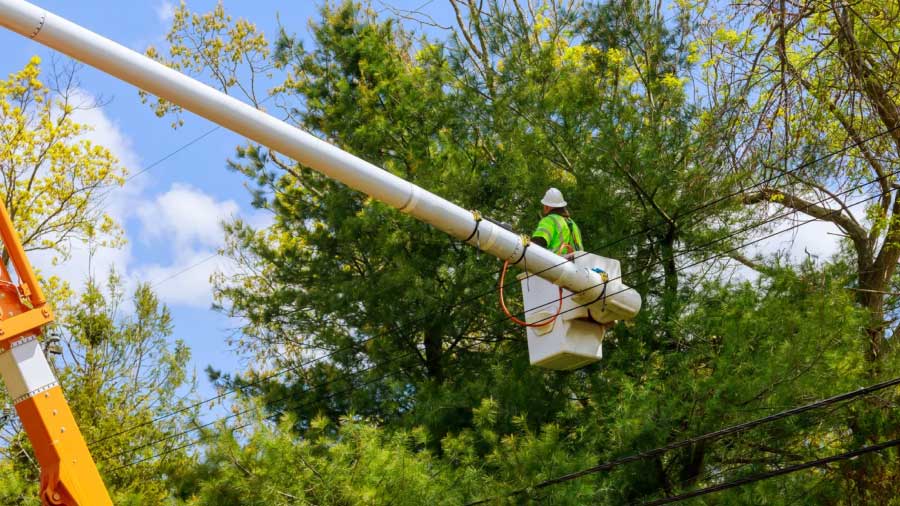
Vegetation is the most common cause of power outages in the U.S., accounting for more than 20% of incidents, and vegetation management is the number one line item on most utilities’ annual budgets. Spending at that scale comes with a reasonable question attached: what did the year’s work change. Field organizations run good programs and document them carefully, and answering that question still means inferring a good deal.
Ask anyone who runs field work what they stopped requesting. They already knew what the job needed, and none of it was impossible. But building the workflow seemed too complicated. And something else always seemed more important.

FSM software earned its category by handling customer service calls well. Asset-driven field work runs on different logic, and the FSM vs. FOM distinction names the gap. Crews feel it on day one, when a job begins at an asset instead of a customer.

Every field organization carries a workflow nobody could justify building: too complicated, too expensive, or just never urgent enough to make it onto a developer’s calendar. Multiply that one shelved idea across every crew, and the backlog turns into the norm. AI-guided workflow creation exists to clear exactly that kind of backlog, without adding a developer to the queue.

Water utilities take center stage in this month’s field operations conversation, from FEMA storm documentation to the stormwater records behind permit renewals. Issue 64 of the Fulcrum Insider also visits a New Zealand utility running three workflows on one platform, and builds a field app live in Fulcrum with AI.

Utilities manage vegetation across every mile of corridor they own, usually without a current picture of what’s growing into the lines. Work gets scheduled by calendar, so some spans get trimmed years early while encroachment builds somewhere nobody’s watching.

GeoAI runs in ArcGIS. Predictive maintenance runs in an EAM. Most AI investments have two things: a team doing the work, and a platform for AI to run on.

GIS reliability and EPA-driven inspection demand define this month’s field operations conversation. Issue 63 of the Fulcrum Insider tackles AI and data quality gaps while stretching your Esri investment further. We also build the case for a dedicated Field Operations Management platform. Three headlines close out the issue, each one tracing back to unreliable field data.

Challenges
Map book creation for field dispatch took up to three days of GIS staff time.
Earth resistance testing required manual asset matching and paper map books for field dispatch.
Logging a new tree asset on site required multiple manual steps.
GIS staff spent a lot of time checking and cleaning field data.
Limited defect visibility made it difficult to track and act on field data.
Alpine Energy runs the electricity network across South Canterbury, New Zealand, where field safety carries real stakes. Getting tree and earth-bank data right catches hazards before they become outages.

Your GIS team shouldn’t have to choose between supporting field workers and keeping pace with everything else. Join us for a practical look at mobile data collection for GIS that works with your Esri infrastructure instead of around it.

Pipeline integrity teams manage corridors spanning hundreds of miles under strict federal repair deadlines. Connectivity gaps and crew expertise gaps compound the challenge in the field. Most software wasn’t built to handle scale, regulation, connectivity, and crew skill gaps together. Here’s what pipeline integrity software needs to deliver instead.

Location data quietly shapes crew productivity, planning accuracy, and public safety, whether teams realize it or not. Issue 62 of the Fulcrum Insider covers reliable geospatial data, seamless GIS workflows, and where AI actually belongs in the field. Three real-world stories round it out, showing what happens when location records fail the people who depend on them.

Most field crews are working across a patchwork of point solutions and paper forms. Moving between them eats hours and produces data nobody trusts until someone cleans it up.

Field crews have always run infrastructure using software built for something else. Field Operations Management (FOM) names the missing category: running, recording, and closing out physical field work. This post covers the category, why existing tools fall short, and why Fulcrum is a Field Operations Management platform purpose-built for the field.

Most GIS teams spend significant time maintaining field apps that should belong to the field team. The problem is structural and won’t be solved by better communication. Discover the ownership shift that fixes it and what both sides get back.

Using AI to vibe code a field tool sounds straightforward until you realize how much groundwork has nothing to do with the problem you set out to solve. Offline sync, spatial data, validation logic, consistent interfaces across devices: field operations demand all of it, and building it from scratch takes months. The smarter approach is extending a platform that’s already handled that work.

The video reveals how maintaining your own field operations platform gives you defensible records to protect your bottom line and move faster than your competition by eliminating those inefficiencies.

Many operations leaders blame scheduling or staffing gaps for missed SLAs, completely overlooking how poor field data accuracy quietly derails their daily workflows. This post explores how high-quality geospatial field data eliminates costly, hidden worker workarounds, improves data capture, and optimizes the entire operational lifecycle across planning, execution, and review. Discover how investing in location data quality transforms field operations performance from reactive firefighting into a compounding competitive advantage.

Building custom field apps has gotten genuinely fast and cheap, and that changes what’s worth considering. It doesn’t change what field software actually has to do.

AEC firms are navigating tighter margins, shifting regulations, and a growing pressure to do more with field data. Issue 61 of the Fulcrum Insider covers AI amplifying field teams, environmental workflows built for constant change, vibe coding your way out of a backlog, and why fragmented data is the real obstacle standing between AEC and its AI ambitions.

Utility infrastructure failures aren’t random. They build through vegetation growth, flood exposure, and shifting climate conditions that field crews encounter on every maintenance visit. Learn how spatial analysis helps utilities identify hidden risks before they become failures — and the field’s role in making that analysis better.

The loudest narrative in field operations AI right now is autonomy: agents that capture evidence, validate it against planned work, and approve jobs without a human in the loop. Fulcrum sees the same potential in autonomous agents, and takes a harder look at where that architecture serves the field and where it doesn’t. In high-variability, high-consequence work, the more valuable investment is AI that augments worker judgment rather than routes around it.

Every field platform captures data. Very few do anything with it after the record saves. A technician closes an inspection, and somewhere in the gap between field and office, someone has to remember to open a work order, start a compliance clock, notify a customer, update a map. On a good day they get to it. On a bad day, nobody does. That gap between what the field knows and what the enterprise knows is where things fall through.

Disconnected field and office workflows cost GIS teams more than time. Inconsistent data capture, manual transfers, and siloed systems produce errors that compound across every project, slowing decisions and degrading the geospatial data organizations depend on. Standardization, customization, and integration work together to close that gap, creating a continuous, reliable pipeline from field collection to office analysis.

AI has made building software through vibe-coding faster and cheaper, but the case for purpose-built field data software is stronger than ever. The real costs of going custom — governance gaps, data inconsistency, data management overhead, security burden, and the ongoing demands of field conditions — don’t disappear because the code was easier to write.

Last-mile horizontal contractors occupy a distinct segment of utility construction that the software industry hasn’t caught up to. Their work spans a wide range of distribution-side job types, each generating dual data obligations: contractor records for billing, payroll, and compliance, and as-built documentation and GIS updates for utility clients. The right utility contractor software serves as a purpose-built field-data layer that handles both sets of obligations and feeds clean, real-time data to every party who depends on it, from contractor back offices to utility teams managing asset lifecycle decisions.

Sometimes you have no choice: Use the client’s software or lose the deal. Other times, it’s tempting to leverage their infrastructure instead of bringing your own field operations platform.
The video reveals how maintaining your own field operations platform gives you defensible records to protect your bottom line and move faster than your competition by eliminating those inefficiencies.

AEC firms are under pressure to deliver more work with leaner crews and less room for error. Issue 60 of the Fulcrum Insider covers the field ops strategies, real-world examples, and industry research helping AEC teams perform consistently when conditions keep getting harder.

Field crews have earned their skepticism. Years of “next big thing” software that couldn’t survive a rainstorm or a dead cell zone will do that. So when AI enters the conversation, the eyerolls begin anew.

The infrastructure sector has never had more operational data, and many have never had less clarity about what it means in the moment. Shared situational awareness replaces the fragmented, team-by-team view of assets and events with a single, real-time operational picture that every role in the organization can trust and act from, producing faster responses, stronger coordination, and infrastructure resilience that holds up under real pressure.

Most construction QA/QC documentation captures what happened but not where. Geolocated field reports fix that by automatically attaching GPS coordinates to every observation, photo, and issue captured in the field. For infrastructure teams, that spatial context is the difference between a record that drives decisions and one that just sits there.

Your maintenance strategy calendar is telling you what equipment you need to maintain — but is it really the right time? How do you know that there isn’t a higher-priority problem out there somewhere? Are you sure you’re rolling your truck to the most important place right now?

Most infrastructure organizations have more inspection data than they can act on and less decision-ready data than they need. Fragmented reports, disconnected GIS systems, and manual processes mean repair priorities often reflect scheduling cycles rather than current field conditions. Discover how mobile data collection, digital workflows, and GIS integration give infrastructure teams the real-time field intelligence to prioritize repairs, improve data quality, allocate budgets, and put smart infrastructure management into practice.

Dam inspections are evolving fast, and organizations that don’t keep pace are carrying more risk than they realize. AI-powered image recognition, drone surveys, and real-time sensor networks are replacing periodic manual checks with continuous, high-resolution dam structural health monitoring that catches problems earlier and keeps personnel out of harm’s way. Add predictive analytics to the mix, and dam management shifts from reactive maintenance to proactive risk prevention.

The grid is under strain, AI is reshaping power demand, and field teams are being asked to do more with tighter margins for error. Issue 59 of the Fulcrum Insider covers the tools, strategies, and outside perspectives helping infrastructure teams stay ahead of it.

Utility field data quality failures rarely announce themselves in the field. By the time you find the problem, during a rate case, a commission audit, or a project closeout, the crews are gone and the records are a mess. Fixing it means manual reconstruction under regulatory deadlines, which is exactly as unpleasant as it sounds.

The critical infrastructure boom is creating more work than many horizontal construction teams can comfortably deliver across horizontal infrastructure projects. Labor shortages, construction supply chain issues, and permitting delays are widening the gap between demand and execution capacity in infrastructure projects. As project volume rises, the ability to execute consistently is becoming a key factor in which organizations turn demand into growth.

While soil samples and borehole logs drive critical engineering decisions, many geotechnical data workflows remain fragmented and inefficient. By implementing a digital geotechnical site investigation strategy, firms can eliminate manual errors common in traditional subsurface data collection. Paper logging, manual transcription, and scattered files slow analysis and create extra work for field and office teams. Modern geotechnical engineering technology connects field capture and geotechnical data management via borehole logging software with centralized data management and automated reporting.

The rise of artificial intelligence, generative AI, and high-performance computing is accelerating data center development and forcing utilities to deliver infrastructure on compressed timelines, making field service execution a critical factor in whether projects move forward on schedule. As power demand increases, field operations often decide whether projects stay on track or fall behind. Utilities that streamline data collection, field service management, and coordination will have a clear advantage as this next phase of development unfolds.

Managing multiple contractors on IOU infrastructure projects becomes challenging when dependencies, timelines, and regulatory requirements are not clearly aligned. EPC partners can reduce fragmentation, but consistent outcomes depend on integrated planning, shared information, and clear ownership across teams. Programs that make progress, risks, and readiness visible are better positioned to reduce delays, limit rework, and maintain alignment as complexity increases, improving overall project execution across complex utility programs.

Struggling to keep infrastructure projects aligned across teams? Large infrastructure programs rely on coordination between utilities, engineering firms, and construction partners. When the infrastructure delivery workflow is fragmented, visibility drops, handoffs break down, and risk increases.

Contractor networks often document field work through a fragmented mix of tools, reporting methods, and formats. Inconsistency makes progress difficult to track and work challenging to verify across different vendors and third parties. When every crew follows a unique process, utilities lose clear visibility into field execution and spend more time coordinating documentation than managing program performance.

Semiconductor manufacturing depends on enormous volumes of reliable power, and that makes energy coordination far more than a utility issue. Grid supply, renewable energy, or clean energy projects, backup systems, and efficiency upgrades all depend on field work that has to be executed, documented, and shared accurately. As fabs expand and uptime and energy security becomes harder to protect, energy coordination is moving closer to the center of semiconductor operations.

Traditional licensing models trap field operations in a rigid box. Growth milestones or operational pivots trigger constant new invoices. Administrative burdens inevitably follow, slowing down execution across the entire organization. Projects then stall while teams wait for procurement to clear new licenses. Most organizations simply accept the resulting bottleneck as the status quo.

Investor-owned utilities have traditionally organized inspections, vegetation management, and infrastructure maintenance around fixed calendar schedules designed to support regulatory compliance and operational coordination. As utilities collect more operational data from digital inspections, GIS systems, and connected field workflows, field intelligence allows utility operations and maintenance teams to prioritize work based on asset condition and emerging risk rather than timing alone. Data-driven utility operations help utilities allocate crews more effectively, detect infrastructure issues earlier, and coordinate field activity using shared operational insight.


