



The Fulcrum Focus
Stay in the know with thought leadership, product updates, and latest field operations management news.
Featured

With Fulcrum MCP connector and AI Toolkit, workflows once too hard to build are now within reach
Every field organization has a list of workflows it decided not to build. Yours might have included confined space entry permitting, or a soil boring log that has to draw the layers, or a weld map that tracks non-destructive testing and coating status joint by joint down a pipeline run. Each one got looked at, considered, and set aside for a reason that made sense at the time.

How the Fulcrum and Slalom partnership brings AI to utility field operations
Utilities looking to put AI to work already hold much of what it needs in their field operations. Asset management, vegetation management, linear construction, and emergency response generate records ranging from inspection findings to proof of work. Getting those records ready for AI has long been a struggle, since they come from separate tools, spreadsheets, and paper forms.
Fulcrum and Overstory, working the same problem from both ends
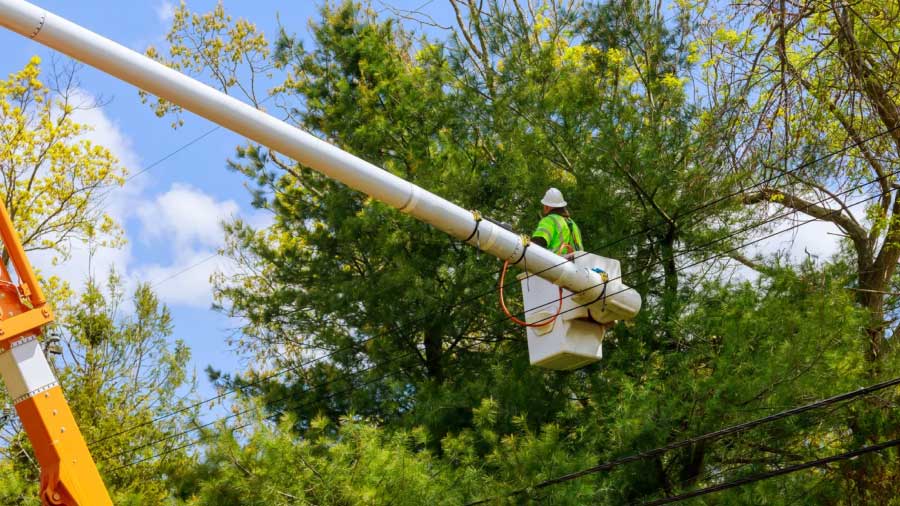
Vegetation is the most common cause of power outages in the U.S., accounting for more than 20% of incidents, and vegetation management is the number one line item on most utilities’ annual budgets. Spending at that scale comes with a reasonable question attached: what did the year’s work change. Field organizations run good programs and document them carefully, and answering that question still means inferring a good deal.

Woolpert and Fulcrum put utility vegetation management risk data in field crews’ hands
Utilities manage vegetation across every mile of corridor they own, usually without a current picture of what’s growing into the lines. Work gets scheduled by calendar, so some spans get trimmed years early while encroachment builds somewhere nobody’s watching.

Why pipeline integrity management demands more than most GIS software delivers
Pipeline integrity teams manage corridors spanning hundreds of miles under strict federal repair deadlines. Connectivity gaps and crew expertise gaps compound the challenge in the field. Most software wasn’t built to handle scale, regulation, connectivity, and crew skill gaps together. Here’s what pipeline integrity software needs to deliver instead.

What is Field Operations Management?
Field crews have always run infrastructure using software built for something else. Field Operations Management (FOM) names the missing category: running, recording, and closing out physical field work. This post covers the category, why existing tools fall short, and why Fulcrum is a Field Operations Management platform purpose-built for the field.

Stop making your GIS team maintain your field apps
Most GIS teams spend significant time maintaining field apps that should belong to the field team. The problem is structural and won’t be solved by better communication. Discover the ownership shift that fixes it and what both sides get back.

How reliable geospatial field data improves field operations performance
Many operations leaders blame scheduling or staffing gaps for missed SLAs, completely overlooking how poor field data accuracy quietly derails their daily workflows. This post explores how high-quality geospatial field data eliminates costly, hidden worker workarounds, improves data capture, and optimizes the entire operational lifecycle across planning, execution, and review. Discover how investing in location data quality transforms field operations performance from reactive firefighting into a compounding competitive advantage.

Revealing hidden risks in utility networks with spatial analysis
Utility infrastructure failures aren’t random. They build through vegetation growth, flood exposure, and shifting climate conditions that field crews encounter on every maintenance visit. Learn how spatial analysis helps utilities identify hidden risks before they become failures — and the field’s role in making that analysis better.

AI in the field: co-pilot, not autopilot
The loudest narrative in field operations AI right now is autonomy: agents that capture evidence, validate it against planned work, and approve jobs without a human in the loop. Fulcrum sees the same potential in autonomous agents, and takes a harder look at where that architecture serves the field and where it doesn’t. In high-variability, high-consequence work, the more valuable investment is AI that augments worker judgment rather than routes around it.

How to build a seamless GIS workflow from field to office
Disconnected field and office workflows cost GIS teams more than time. Inconsistent data capture, manual transfers, and siloed systems produce errors that compound across every project, slowing decisions and degrading the geospatial data organizations depend on. Standardization, customization, and integration work together to close that gap, creating a continuous, reliable pipeline from field collection to office analysis.

Sure, you can vibe-code a field app. But should you?
AI has made building software through vibe-coding faster and cheaper, but the case for purpose-built field data software is stronger than ever. The real costs of going custom — governance gaps, data inconsistency, data management overhead, security burden, and the ongoing demands of field conditions — don’t disappear because the code was easier to write.

Utility contractor software for last-mile distribution work
Last-mile horizontal contractors occupy a distinct segment of utility construction that the software industry hasn’t caught up to. Their work spans a wide range of distribution-side job types, each generating dual data obligations: contractor records for billing, payroll, and compliance, and as-built documentation and GIS updates for utility clients. The right utility contractor software serves as a purpose-built field-data layer that handles both sets of obligations and feeds clean, real-time data to every party who depends on it, from contractor back offices to utility teams managing asset lifecycle decisions.

One view, one truth: The rise of shared situational awareness in infrastructure operations
The infrastructure sector has never had more operational data, and many have never had less clarity about what it means in the moment. Shared situational awareness replaces the fragmented, team-by-team view of assets and events with a single, real-time operational picture that every role in the organization can trust and act from, producing faster responses, stronger coordination, and infrastructure resilience that holds up under real pressure.

Geolocated field reports: The missing link in construction QA/QC
Most construction QA/QC documentation captures what happened but not where. Geolocated field reports fix that by automatically attaching GPS coordinates to every observation, photo, and issue captured in the field. For infrastructure teams, that spatial context is the difference between a record that drives decisions and one that just sits there.

How to prioritize infrastructure repairs with real-time field data
Most infrastructure organizations have more inspection data than they can act on and less decision-ready data than they need. Fragmented reports, disconnected GIS systems, and manual processes mean repair priorities often reflect scheduling cycles rather than current field conditions. Discover how mobile data collection, digital workflows, and GIS integration give infrastructure teams the real-time field intelligence to prioritize repairs, improve data quality, allocate budgets, and put smart infrastructure management into practice.

The future of dam inspections: AI, automation, and predictive analytics
Dam inspections are evolving fast, and organizations that don’t keep pace are carrying more risk than they realize. AI-powered image recognition, drone surveys, and real-time sensor networks are replacing periodic manual checks with continuous, high-resolution dam structural health monitoring that catches problems earlier and keeps personnel out of harm’s way. Add predictive analytics to the mix, and dam management shifts from reactive maintenance to proactive risk prevention.

Infrastructure boom: Why horizontal construction is facing a delivery crunch
The critical infrastructure boom is creating more work than many horizontal construction teams can comfortably deliver across horizontal infrastructure projects. Labor shortages, construction supply chain issues, and permitting delays are widening the gap between demand and execution capacity in infrastructure projects. As project volume rises, the ability to execute consistently is becoming a key factor in which organizations turn demand into growth.

From soil boring to final reporting: Modernizing the geotechnical data workflow
While soil samples and borehole logs drive critical engineering decisions, many geotechnical data workflows remain fragmented and inefficient. By implementing a digital geotechnical site investigation strategy, firms can eliminate manual errors common in traditional subsurface data collection. Paper logging, manual transcription, and scattered files slow analysis and create extra work for field and office teams. Modern geotechnical engineering technology connects field capture and geotechnical data management via borehole logging software with centralized data management and automated reporting.

The AI data center boom is a field operations challenge
The rise of artificial intelligence, generative AI, and high-performance computing is accelerating data center development and forcing utilities to deliver infrastructure on compressed timelines, making field service execution a critical factor in whether projects move forward on schedule. As power demand increases, field operations often decide whether projects stay on track or fall behind. Utilities that streamline data collection, field service management, and coordination will have a clear advantage as this next phase of development unfolds.

Managing multiple contractors on IOU infrastructure projects with EPC partners
Managing multiple contractors on IOU infrastructure projects becomes challenging when dependencies, timelines, and regulatory requirements are not clearly aligned. EPC partners can reduce fragmentation, but consistent outcomes depend on integrated planning, shared information, and clear ownership across teams. Programs that make progress, risks, and readiness visible are better positioned to reduce delays, limit rework, and maintain alignment as complexity increases, improving overall project execution across complex utility programs.

Why energy coordination is becoming a critical semiconductor capability
Semiconductor manufacturing depends on enormous volumes of reliable power, and that makes energy coordination far more than a utility issue. Grid supply, renewable energy, or clean energy projects, backup systems, and efficiency upgrades all depend on field work that has to be executed, documented, and shared accurately. As fabs expand and uptime and energy security becomes harder to protect, energy coordination is moving closer to the center of semiconductor operations.

From calendar planning to data-driven utility operations
Investor-owned utilities have traditionally organized inspections, vegetation management, and infrastructure maintenance around fixed calendar schedules designed to support regulatory compliance and operational coordination. As utilities collect more operational data from digital inspections, GIS systems, and connected field workflows, field intelligence allows utility operations and maintenance teams to prioritize work based on asset condition and emerging risk rather than timing alone. Data-driven utility operations help utilities allocate crews more effectively, detect infrastructure issues earlier, and coordinate field activity using shared operational insight.

AI in the field starts with alignment between utilities and contractors
AI projects in the energy and utilities sector often fail for reasons that have little to do with the technology itself. The real challenge is aligning utilities and utility contractors on how field data is collected, validated, and integrated into existing systems. When those foundations are in place, artificial intelligence in utilities can move beyond pilot programs and begin delivering measurable operational value as part of broader digital transformation efforts.

Quantifying distributed energy resource value for investor-owned utilities
Distributed energy resources can reduce peak demand, defer infrastructure upgrades, and create new market opportunities for utilities. Determining where those assets, including renewable energy resources, deliver real grid value requires reliable operational data that connects field activity to system performance. By standardizing field data collection and integrating it with planning and asset systems, utilities can quantify DER contributions and evaluate them alongside traditional infrastructure investments.

IOU compliance strategies for complex PUC reporting
Investor-owned utilities face growing complexity in meeting PUC requirements and regulatory guidelines as programs such as renewable resource development demand precise, traceable field documentation. IOU compliance depends on standardized data capture, real-time validation, and centralized governance that reduce reporting delays and audit strain. By embedding structured workflows into daily operations, utilities can align field execution, IT oversight, and regulatory reporting within a single, governed framework.

The shift to private generation for AI power consumption
Generative AI expansion is reshaping the power landscape as hyperscale data centers training Large Language Models outgrow the limits of the public grid. Rising AI power consumption and accelerating data center energy demand, driven by escalating electricity demand, are pushing technology firms toward private generation and direct investment in energy infrastructure. As organizations assume responsibility for large-scale power generation, infrastructure planning, field execution, and asset oversight become central to long-term growth.Five key insights

The role of GIS in enhancing IOU field operations
Investor-owned utilities in the United States electric power industry can’t manage growing grid complexity with static maps and delayed records. When field updates fail to reach central systems, risk-based planning breaks down and crews work from incomplete information. Explore how GIS restores real-time visibility across IOU field operations for asset maintenance, routing, vegetation risk, emergency response, and long-term planning.

How investor-owned utilities (IOUs) can build a high-performance field culture through data transparency
Investor-owned utilities (IOUs) generate vast amounts of utility data, yet high-performance field culture depends on making that information visible and usable across roles. When productivity, quality, safety, and equity metrics remain accessible to crews, supervisors, and executives, transparency strengthens accountability, coordination, and real-time decision-making. By embedding shared visibility into daily grid operations through investor-owned utility software, IOUs build resilient field cultures grounded in measurable performance.

AI-powered inspections: The future of T&D fieldwork
AI is reshaping transmission and distribution fieldwork by aligning digital workflows with how inspections actually happen in the field. Applying artificial intelligence through practical AI inspection tools helps teams reduce documentation friction while improving the consistency of inspection outputs, inspection reports, and downstream asset records.

Building the “AI-ready” utility workforce
Realizing the full potential of AI in utiltiies depends on a workforce empowered to capture high-quality data at every point of contact with the grid. By modernizing field workflows and prioritizing a human-in-the-loop approach, organizations establish the reliable data foundation necessary for long-term resilience and advanced automation.

Surging AI data center power demands require a new utility playbook
AI data center power demands are reshaping how utilities plan, build, and maintain their electric grids and distribution systems. Faster development cycles, shifting load patterns, and new on-site assets create conditions that rely heavily on accurate, timely field intelligence. Utilities that adopt field-first workflows gain a clearer picture of evolving sites and a stronger foundation for decisions that support smart grid technology throughout each phase of AI-driven growth.

How integrated utility asset management lowers operating costs
Fragmented systems drain budgets, complicate regulatory compliance, and burn out crews, but modern utility asset management offers a fix. We explain how integrated asset management eliminates the chaos of disconnected spreadsheets to lower operating costs, guide smarter infrastructure investments, and extend asset life across the entire infrastructure life cycle. Read on to see how utility operations can improve electric grid reliability and transform utility infrastructure management from a headache into a strategic advantage.

Breaking down data silos in electric utility operations
Modern electric utility operations run on data from operational technology, GIS, asset systems, information technology applications, and field crews, but silos between those utility systems create blind spots that slow outage restoration, complicate business continuity management, and raise risk. See how breaking down those silos and creating a connected operational picture turns raw operational data into faster, safer decisions in the field, the control room, and the utility field operations center.

What utilities are looking for in field technology in 2026 and beyond
The first wave of utility digitization is over; the new executive mandate is to get predictive. Fulfilling that mandate requires a new breed of field technology built on three pillars: active intelligence at the point of capture, seamless enterprise integration, and immediate operational insight driven by modern data analytics and artificial intelligence. The combination of the three pillars creates a resilient operational model, helping utilities manage grid complexity and adopt smart grid technologies. It also supports the shift from reactive responses to predictive operations.”

From AI to field data: what’s driving conversation at Esri IMGIS 2025
Esri IMGIS 2025 centers on resilience, sustainability, and the growing role of AI in GIS to connect planning, operations, and field execution. Across sessions on digital twins, field mobility, and data integration, the message remains clear: real progress depends on accurate, timely field data. As an Esri partner, Fulcrum shares that focus, helping teams keep GIS systems current through connected, field-first workflows that complement ArcGIS Pro and the ArcGIS Utility Network.

Fast lane to custom fieldwork apps: Clone it, tweak it, crush it
Field teams managing critical assets can’t wait on slow software development cycles so they end up relying on costly workarounds. Fulcrum, a no-code field inspection app with intuitive digital form design, changes that dynamic by allowing teams to clone, adjust, and deploy apps instantly. With this approach, organizations move from reactive fixes to proactive, continuous improvement in how field data is captured and managed.

When your field mapping workflows break your maps
Reliable GIS starts with field mapping workflows designed for accuracy from the outset. These workflows keep field data and real-time data in sync with web maps and feature layers so spatial data stays trustworthy from collection to decision. By combining automatic GPS tagging, in-field validation, and mobile tools that streamline data capture, teams produce consistent data that drives dependable maps and actionable insights.

How Fulcrum amplifies geospatial AI with advanced field data analysis
Geospatial AI can forecast infrastructure needs, model environmental changes, and support critical decisions, but its accuracy depends on reliable field data. Fulcrum equips teams to capture precise, validated information in the field and send it directly into GIS and AI workflows. By maintaining accuracy from collection through analysis, Fulcrum helps ensure geospatial insights reflect real-world conditions. This streamlined connection ensures that your geospatial artificial intelligence models receive the most accurate, real-time spatial inputs possible.

Fulcrum mobile workflows vs spreadsheets for horizontal construction
Spreadsheets fall short when it comes to capturing reliable horizontal construction daily logs. Fulcrum mobile workflows replace spreadsheets with structured, real-time documentation that improves consistency, strengthens claims, and reduces risk. By using a mobile app for construction workflows, field teams streamline business processes and replace slow, error-prone manual entry with workflow automation that works anywhere they do.

Data-driven resilience planning: Why better field workflows lead to smarter infrastructure
Resilience planning relies on accurate, current field data that reflects real-world conditions. Structured, location-aware workflows make that data reliable, easy to use, and ready for action. When the right information flows quickly from field to office, infrastructure resilience stops being theory and becomes something teams can build and maintain.

How GIS supports every phase of wildfire response strategy
Explore how GIS keeps wildfire response moving from risk modeling and crew coordination to long-term recovery. See how wildfire data becomes actionable across the full lifecycle, and why usability in the field is just as critical as analysis at command.

Fulcrum at Esri User Conference 2025: redefining fieldwork with agentic AI
What a week it’s been at the Esri User Conference! For the past five days, San Diego has been buzzing with the brightest minds in GIS. A large crew from Fulcrum was there, going to sessions, connecting with people at the booth, and, of course, socializing with peers after hours. It was a great week focused on pushing the boundaries of geospatial technology.

Credible ESG & corporate sustainability reporting starts with reliable field data
Environmental field data serves as the backbone of credible ESG reporting. Mobile workflows bring structure, transparency, and real-time validation to data collection, helping organizations meet environmental standards, track impact, and prove progress with clarity and precision. Robust corporate sustainability reporting and climate‑related disclosure depend on the same reliable field metrics.

How utilities use GIS to manage environmental risk
Utilities face growing pressure to identify and respond to environmental risk quickly and accurately. GIS platforms paired with mobile field data collection solutions empower utility teams by combining real-time location-based data with on-the-ground observations, enhancing environmental management strategies and compliance. By layering live and historical data while integrating field updates, this combination turns environmental risk from a reactive challenge into a proactive operational priority.

How GeoAI is shaping the future of field operations
GeoAI combines artificial intelligence with geospatial data in a deep learning model to help field teams work faster, make better decisions, and stay ahead of operational challenges. This blog explains how GeoAI evolved, what it enables today, and how it’s reshaping asset management, risk detection, and resource planning across industries. It also explores practical considerations like implementation, data security, and future trends including IoT integration and adaptive machine learning.

GIS project management: best practices and challenges
GIS data is the cornerstone of planning decisions. It collects development project data and helps with project monitoring. Having GIS data in a project is a clear path to success when paired with a rigorous project management approach and a controlling process within the project team. GIS data helps us understand the relationships between a location and the surrounding environmental and social context. In sectors like utilities, environmental engineering, telecom, and others, GIS project managers use geospatial data to create accurate models and forecast possible risks. Project teams plan and oversee the completion of all major GIS-related projects. They depend on accurate field data to create timelines and allot resources. Because every stage must align with the team’s application of knowledge, skills, tools, and techniques, GIS project management is a complex job, with many moving parts. In addition to creating the overall workflow plan and timeline, the project manager also interacts with clients, oversees the budget, and supervises work teams.

How GIS mobile data collection connects teams across distances
In this article we explore how field data collection with mobile GIS cloud platforms like Fulcrum enable seamless, real-time communication and coordination between field and office teams. By capturing geospatial data instantly and sharing it across locations; organizations can make faster, smarter decisions and operate more efficiently.

How field-first platforms extend the value of ArcGIS solutions
Learn how pairing field-first platforms with ArcGIS strengthens GIS accuracy and improves workflows, and how structured, real-time field data collection eliminates delays and integrates cleanly into ArcGIS systems.

Why regular field inspection process is critical for operational efficiency
Explore why regular field inspections are essential for maintaining operational efficiency across construction, engineering, and utility teams, and how a consistent, well-managed field inspection process helps teams catch issues early, improve coordination, and reduce costly delays.

When environmental regulations shift, will your team be ready?
Find out how rapid changes in environmental regulations pressure field operations across industries like utilities, construction, and oil and gas. Discover the the operational risks of relying on outdated systems for regulatory change management, and how flexible, configurable field data collection platforms like Fulcrum ensure fast adaptation, maintain regulatory compliance during disruptions, and avoid costly rework.

Time-saving GIS data collection techniques
Discover how Fulcrum FieldTech improves GIS data collection and geospatial data. It streamlines processes, boosts data accuracy, and enhances team efficiency with modern, customizable, real-time tools. These capabilities address common field operation challenges and enable organizations to collect data efficiently through mobile data collection technology.